Selecting the right swim fins can dramatically alter your aquatic workout, impacting everything from propulsion efficiency to the specific muscle groups engaged. While both short training fins and long diving fins serve to enhance your kicking power, their design dictates fundamentally different applications and techniques. Understanding these distinctions is crucial for swimmers, fitness enthusiasts, and divers aiming to optimize performance, build strength, or simply enjoy their time in the water more effectively. This deep dive compares the two fin types across propulsion, kick technique, fitness applications, and guides you toward the best choice for your aquatic goals.
Quick Comparison: Key Differences Between Short Training Fins and Long Diving Fins
The most apparent difference lies in their length and blade surface area. Short training fins typically range from 6 to 12 inches in length, featuring a relatively stiff blade designed for agility and frequent kicking. They are often made from firmer rubber or polyurethane compounds. Long diving fins, conversely, are significantly longer, often exceeding 20 inches, with a more flexible and wider blade. This design prioritizes maximizing water displacement with each stroke, generating powerful, slower kicks ideal for efficient movement through larger bodies of water.
| Feature | Short Blade Training Fins | Long Diving Fins |
|---|---|---|
| Blade Length | 6 – 12 inches | 20+ inches |
| Blade Stiffness | Stiff to Medium-Stiff | Medium-Flexible |
| Primary Use | Training, Agility, Strength | Diving, Snorkeling, Speed |
| Kick Frequency | High | Low to Medium |
| Muscle Engagement | Quads, Hamstrings, Glutes (High intensity) | Hamstrings, Glutes, Calves (Power focus) |
| Weight | Lighter, more portable | Heavier, bulkier |
| Typical Price Range | $40 – $80 | $70 – $150+ |
Short Blade Training Fins: Agility and Strength Building
Short training fins are the workhorse for swimmers focused on improving technique, building leg strength, and increasing cardiovascular fitness. Their smaller blade size necessitates a higher kick frequency, demanding more from the quadriceps, hamstrings, and glutes. This rapid kicking motion helps swimmers develop muscle memory for a more efficient flutter kick. The increased resistance also provides a more intense workout, akin to strength training for the legs, enhancing power and endurance over time. Their compact size makes them easy to pack for travel or gym bags, positioning them as a versatile tool for dedicated aquatic athletes.

Long Diving Fins: Speed and Efficiency for Exploration
Long diving fins are engineered for maximum propulsion with minimal effort per stroke. Their extended, often softer blades capture more water, allowing divers and snorkelers to glide through the water with fewer kicks and greater speed. This design conserves energy, which is critical during extended underwater exploration or open-water swimming where endurance is paramount. The broader, more flexible blade also encourages a smoother, more powerful kick, typically involving the larger muscle groups like the hamstrings and glutes, with less emphasis on rapid, high-frequency movements. They are the preferred choice for those who prioritize covering distance efficiently and maintaining buoyancy control in dynamic environments.
Propulsion Mechanics: How Each Fin Type Affects Your Kick
The fundamental difference in how short and long fins generate propulsion stems directly from their blade design and the resulting kick mechanics they promote. Understanding these mechanics is key to harnessing their benefits effectively and avoiding inefficient or injurious movements.
The Science Behind Short Fin Propulsion: High-Frequency Kicking
Short fins excel at promoting a high-frequency kick. Because the blade surface is smaller, a greater number of smaller, faster movements are required to generate significant thrust. This action engages the fast-twitch muscle fibers more intensely. The resistance provided by the stiff blade forces the kick to originate from the hips and be driven by the quads and hamstrings, with the calf providing the final whip-like action. This repetitive, rapid motion builds muscular endurance and power, improving the swimmer’s ability to maintain a fast pace over shorter intervals. The water flow over the smaller blade is more turbulent at higher frequencies, but the sheer number of strokes compensates for this, leading to increased overall speed for those who can sustain the tempo.
The Science Behind Long Fin Propulsion: Powerful, Slower Strokes
Long fins operate on a different principle: maximizing water displacement with each, slower, more deliberate stroke. The extended, flexible blade acts like a lever, allowing the diver to harness the power of their larger leg muscles, particularly the hamstrings and glutes, to push a greater volume of water backward. This generates more forward thrust per kick, reducing the need for high frequency. The motion is more akin to a powerful whip-like action that starts from the hip, travels through the knee, and finishes with a controlled ankle flex. This technique is highly efficient for covering distance, as it minimizes drag and conserves energy, making it ideal for exploration and endurance activities where sustained movement is key.

Kick Technique Mastery: Optimizing Your Stride with Each Fin Type
To truly benefit from either type of fin, mastering the appropriate kick technique is essential. Each fin type encourages and rewards different kicking styles, and improper application can lead to inefficiency or injury.
Developing a Powerful Flutter Kick with Short Fins
With short training fins, the focus is on developing a rapid, consistent flutter kick. The kick should originate from the hips, with legs moving in a relatively straight line up and down. Knees should remain slightly bent, not locked, to allow for flexibility and shock absorption. The ankle should be relatively straight and relaxed, acting as the final point of propulsion to whip through the water. Short fins demand a quick cadence; think of it as rapidly drumming your feet. Aim for a consistent tempo, ensuring that each kick contributes to forward momentum. This repetitive motion is excellent for building the endurance and strength needed for a powerful flutter kick, especially in pool training scenarios.
Refining the Dolphin Kick for Maximum Efficiency with Long Fins
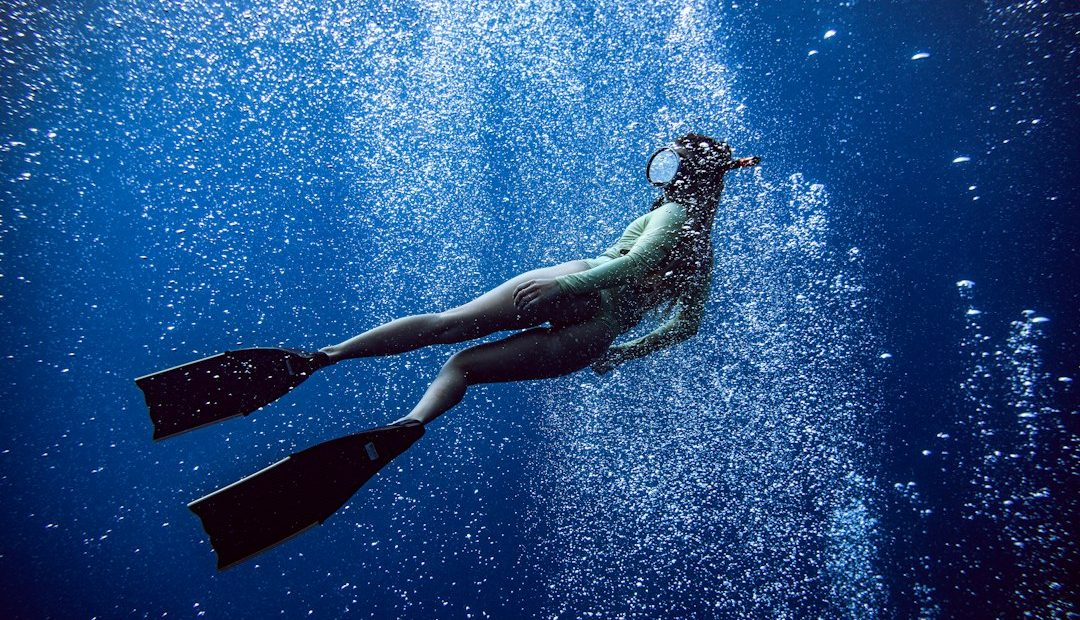
Long diving fins are ideally suited for the dolphin kick, particularly in freediving and snorkeling. This technique involves a more undulating, wave-like motion that starts from the head and travels down the body to the feet. The kick is generated by the powerful up and down movement of the hips, with the fins acting as the final extension of this motion. Knees are bent during the downstroke and can straighten slightly on the recovery. The ankles are kept relaxed and relatively straight, allowing the entire length of the fin to engage with the water. The key is fluidity and power generated from the core and hips, with the fins providing the amplified thrust. This technique minimizes resistance and maximizes distance covered with each powerful stroke.
Preventing Injury: Proper Kick Form for Both Fin Types
Regardless of fin type, maintaining proper form is paramount to prevent injuries, particularly to the knees, ankles, and lower back.
For short fins, avoid over-flexing the knees or kicking too rigidly from the knee joint. Ensure the kick originates from the hips and that the ankles remain relaxed. Rapid, repetitive motions can strain smaller muscles if form breaks down.
For long fins, the most common injury risk comes from over-extending the knee or ankle on the downstroke, or kicking too hard without the core engagement to support it. Avoid locking the knees. Ensure the movement is fluid and originates from the hips. A common technique error with long fins is the “bicycle kick,” where the knees bend excessively, leading to inefficiency and potential strain. Always focus on a smooth, powerful, and controlled motion originating from the core.

Aquatic Fitness Applications: Maximizing Your Workout
The distinct characteristics of short and long fins lend themselves to different aquatic fitness goals. Choosing the right fin type can transform your training regimen.
Short Fins for Interval Training and High-Intensity Aquatic Workouts
Short training fins are ideal for interval training and high-intensity workouts. Their design encourages rapid kicking, which elevates the heart rate quickly and provides a robust cardiovascular challenge. Swimmers can use them for sprints, kick sets, and agility drills. The increased resistance also acts as a form of resistance training, building leg muscle strength and power. Incorporating short fins into a workout can significantly boost calorie burn and improve overall swimming speed and stamina. They are particularly effective for swimmers looking to enhance their competitive edge or push their limits in structured training sessions.
Long Fins for Endurance Swimming and Open Water Fitness
Long diving fins are superior for endurance-focused aquatic fitness. Whether swimming laps in a pool, snorkeling in the ocean, or participating in open-water swimming events, long fins allow for sustained, efficient movement. They enable swimmers to cover greater distances with less effort, reducing fatigue and allowing for longer workout durations. The smooth, powerful propulsion aids in maintaining a consistent pace and improving overall swimming efficiency. For those training for triathlons or engaging in regular open-water swimming, long fins are an indispensable tool for building the necessary endurance and comfort in the water.
Cross-Training Benefits: How Each Fin Type Enhances Overall Fitness
Both fin types offer valuable cross-training benefits that extend beyond the pool. Short fins, with their emphasis on high-frequency kicking and resistance, can improve leg strength, power, and cardiovascular endurance, which translates to better performance in land-based activities like running and cycling. They also enhance core stability due to the increased demand on stabilizing muscles during rapid kicking. Long fins, by promoting a smooth, efficient, and powerful kick, improve flexibility in the hips and ankles, enhance core engagement for better balance and posture, and build lean muscle mass in the legs and glutes. This improved efficiency and lower impact can also be beneficial for rehabilitation or for individuals seeking a low-impact yet highly effective full-body workout.
Choosing the Right Fins for Your Goals: A Practical Guide
The decision between short training fins and long diving fins hinges on your specific goals, current fitness level, and intended activities. A thoughtful assessment will lead to the most beneficial choice.
Assessing Your Current Skill Level and Fitness
Beginners or those primarily focused on technique correction might find short fins beneficial, as they highlight flaws in kick mechanics and demand a consistent tempo. However, the intensity can be high, so starting with shorter durations is advisable. Swimmers with a solid foundation in kicking technique and a desire to build power might also lean towards short fins. For those prioritizing endurance, covering distance, or simply enjoying a more relaxed swim, long fins offer a more forgiving and efficient experience. Advanced swimmers aiming for speed and efficiency in open water might find both types valuable for different training purposes.
Matching Fins to Your Aquatic Activities: Pool vs. Open Water
For Pool Training: Short fins are excellent for structured workouts, interval training, and technique drills focusing on kick speed and power. Long fins can be used for endurance sets and longer continuous swims to build stamina.
For Snorkeling and Recreational Diving: Long fins are the standard. They provide the necessary propulsion to move efficiently through the water with minimal effort, allowing for longer underwater exploration and comfort.
For Open Water Swimming/Fitness: Long fins are generally preferred for their efficiency in covering distance and maintaining momentum against potential currents or waves. Short fins can be incorporated for specific sprint or interval training within an open-water context, but are less practical for sustained swimming.
Top Picks: Performance-Tested Short Blade Training Fins for 2026
When selecting short training fins, look for durable materials like high-grade rubber or polyurethane. Key features include a comfortable foot pocket that prevents chafing and a blade stiffness appropriate for your strength and endurance level. Brands like Speedo, FINIS, and Arena consistently offer top-tier models. The FINIS Zoomers Gold are a perennial favorite for their balanced stiffness and comfortable fit, promoting a high-frequency kick. The Speedo Biofuse Fitness Fin offers a slightly softer blade for comfort during longer sessions, while the Arena Powerfin Pro is favored by competitive swimmers for its stiff blade and responsive propulsion.
Top Picks: Industry-Leading Long Diving Fins for 2026
For long fins, the emphasis is on blade flexibility, material composition, and a comfortable, secure foot pocket. Brands such as Cressi, Mares, Scubapro, and Atomic Aquatics are renowned for their quality. The Cressi Gara 2000 HF is a benchmark for freedivers and snorkelers, offering a superb blend of power and flexibility. The Mares Avanti X3 is a versatile option known for its comfort and effective propulsion. For advanced divers seeking maximum efficiency, the Atomic Aquatics Split fins X provide a unique design that promotes a natural, energy-saving kick.
FAQ: Common Questions About Fin Propulsion and Kick Technique
Q: Can I use long diving fins for strength training in the pool?
A: While long fins can provide resistance, they are not optimized for the high-frequency, high-intensity kicking typically associated with strength training. Short training fins are far more effective for this purpose.
Q: Will using fins help me swim faster?
A: Yes, both types of fins will increase your speed. Short fins allow for higher stroke rates and build the power for faster kicking, while long fins provide greater thrust per stroke for increased overall velocity and efficiency, especially over longer distances.
Q: How often should I use fins in my training?
A: For training fins, incorporating them into 2-3 workouts per week for dedicated kick sets or specific sets can yield significant improvements. For long fins used for fitness, they can be used for the majority of your swim time to build endurance.
Q: Are long fins harder to kick with than short fins?
A: Not necessarily harder, but they require a different type of effort. Long fins demand powerful, deliberate strokes, whereas short fins require a higher tempo and more sustained effort. Beginners might find the sheer size of long fins initially challenging to maneuver, but the energy expenditure per kick is often lower.
Q: Can fins help improve my natural swimming ability without fins?
A: Absolutely. Training with fins helps build leg strength, improves kick technique, and enhances cardiovascular fitness. The muscle memory developed and the increased awareness of proper body positioning and propulsion translate directly to improved performance when swimming without fins.
👑 Ultimate Winner: Versatility for Fitness & Technique
For overall aquatic fitness, versatility, and technique development, Short Blade Training Fins often emerge as the more broadly applicable tool. They excel at building strength, improving kick mechanics through high-frequency drills, and providing an intense cardiovascular workout. While long diving fins are superior for pure speed, efficiency, and endurance in specific applications like freediving or long-distance swimming, short fins offer a more comprehensive training stimulus that benefits a wider range of swimmers and fitness goals. They are invaluable for isolating and strengthening leg muscles and refining the flutter kick, directly translating to better performance across various swimming disciplines.